The Hero Journey
“Thus, the hero is the archetypal forerunner of mankind in general. His fate is the pattern in accordance with which the masses of humanity must live, and always have lived, however haltingly and distantly; and however short of the ideal man they have fallen, the stages of the hero myth have become constituent elements in the personal development of every individual.” ~ Erich Neumann
Part of the legacy of the great mythologist Joseph Campbell was to synthesize heroic myths from all cultures and identify common cycles of archetypal experience, which have become known as the Hero Journey. Literature abounds with such tales, one of the more familiar being that of Bilbo Baggins. While such a noble venture might sound a far cry from the neighbour changing their job, or spouse, as the case may be, behind these outer manifestations of change often lie a common theme, a common discontent that has been played out in different ways since time immemorial. Certainly, they are enacted (sort of) over and over again in the epics and melodramas of Hollywood.
We are made up as much from our future as from our past and the gift of astrology is to offer a template from which both may take their place in the great heroic round that may, with right intention, unfold, even in this age, as the Hero Journey. For there are times in our lives when quite literally a sword is thrown down before us and we must choose whether or not to pick it up. At other times, we find ourselves at a “crossroads” and must decide which way to go, sometimes before an opening when the only way is down, or indeed in a dark wood and cannot see very clearly at all. Like Parsifal, we do not necessarily go in search of such a quest as such, but a life deeply lived generally has a way of becoming one and we find that certain conditions, heroic conditions, have to be fulfilled. Further, in many myths and fairy tales while there is rarely a difficulty in getting into the “Beyond,” or that great and terrible “place bellow” there can be terrible difficulty getting back.
The ideal of the heroic journey, available to everyone no matter their state or circumstance, is the theme around which the content of these pages weave.
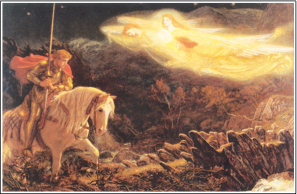
“What I think” wrote Joseph Campbell, ” is that a good life is one hero journey after another. Over and over again, you are called to the realm of adventure; you are called to new horizons. Each time, there is the same problem: do I dare? And then if you do dare, the dangers are there, and the help also, and the fulfillment or the fiasco. There’s always the possibility of a fiasco. But there’s also the possibility of bliss.
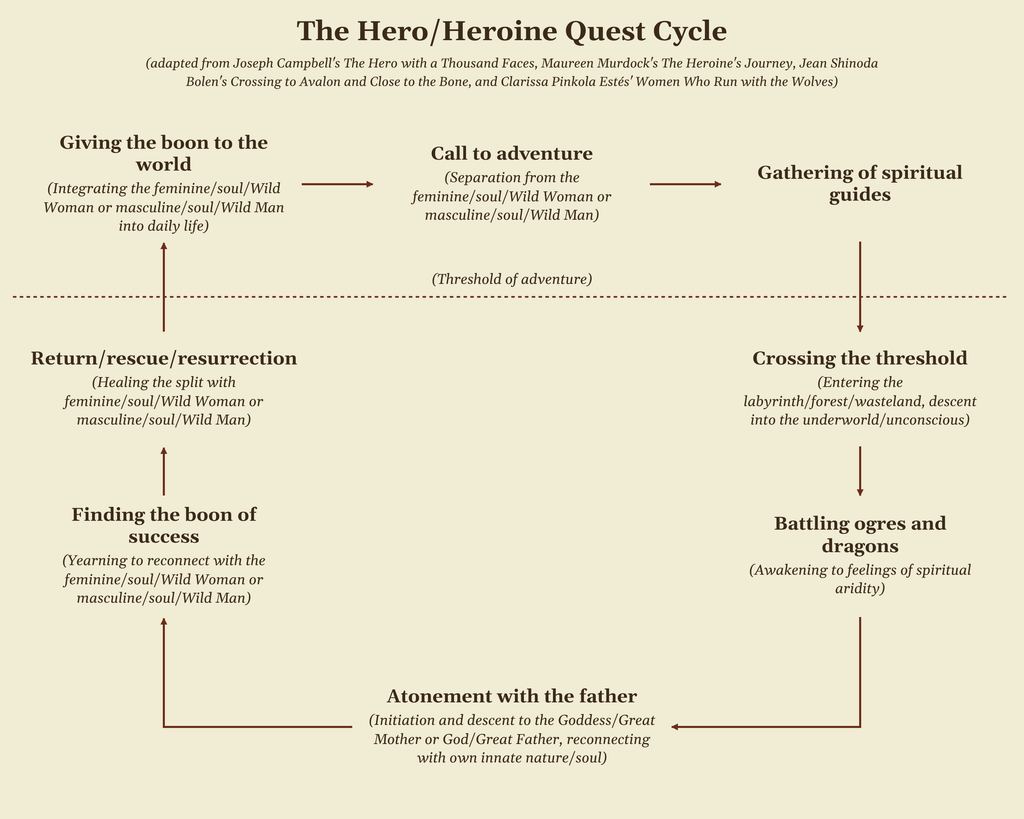
At some point then, in their growing up, the Hero receives their “call to adventure” and so it is that…“The mythological hero, setting forth from his common day hut or castle, is lured, carried away, or else voluntarily proceeds, to the threshold of adventure.” ~ Joseph Campbell
This is often mythic in character and usually involves the modern equivalent of the crops failing (loss), or the (inner) king falling sick and ailing (depression), plague or invasion threaten (the psyche), which in reality can precede a sudden awakening to purpose (vocation) and destiny (fate). Often the hero’s call is concurrent with some apparent disaster, but whatever the crisis we are forced to embrace some unknown and discover something new, at different levels at various times in our life. It is as if we are driven by some inner necessities that require us to make some major choices.
Myths and fairytales are instructive here, for collectively they seem to contain the full repertoire of possible experiences and feeling states identifying with unerring and unsettling accuracy both the issue and the pathway through.
After the ‘Call’ comes the ‘Threshold Crossing’ when the hero is challenged to pursue the deeper meaning of their calling. Mythic initiations have three distinct phases, separation, transition and return. The call to adventure initiates the separation. By the time the hero approaches the threshold his or her choices have dwindled down to very few. At this point they can choose to cross the threshold willingly, sometimes for the adventure itself, (the Cardinal signs,) or they can embrace it with optimism, confidence and anticipation (the mutable signs). Alternatively, they can turn away altogether (which at this point would mean symbolic death and the end of the adventure), or they can be dragged proverbially kicking and screaming into the adventure (the fixed signs). In any case once the threshold has been crossed there is no turning back, one is irrevocable committed.
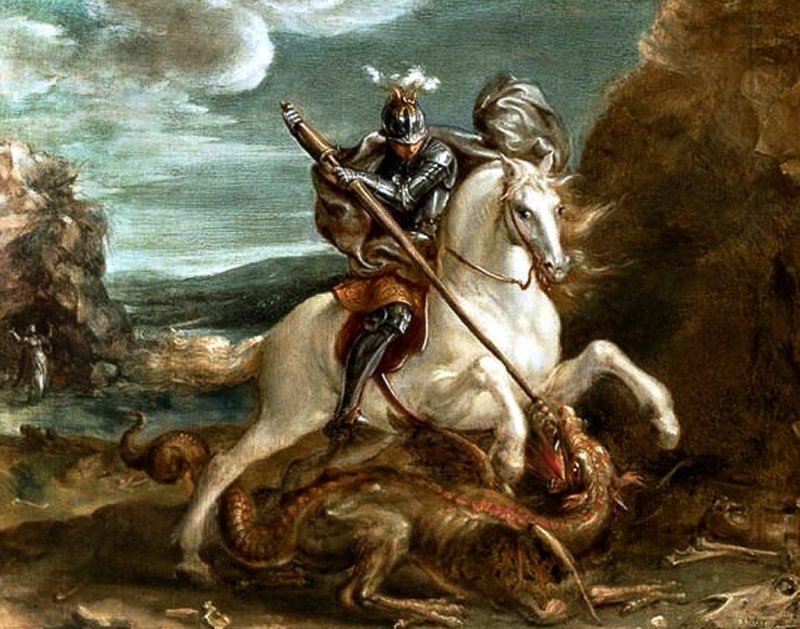
Thus, begins our dragon fight, which is the battle with all that is negative, tyrannical and potentially devouring. In overcoming this the separation has been made and having proven their capacity to stand-alone they are now equipped to begin the adventure proper where he/she…
“ encounters a shadow presence that guards the passage. The hero may defeat or conciliate his power and go alive into the kingdom of the dark (brother-battle, dragon-battle; offering, charm), or be slain by the opponent and descend in death (dismemberment, crucifixion). ~ Joseph Campbell
In crossing the threshold, the hero then journeys into different worlds, strange landscapes where all is not what it seems for tests lie ahead and somehow a price must be paid. This may be with some aspect of self as with Inanna who as she progressed down to the ‘great place below’ where she was at each of the seven gateways required to leave successive garments until none were left. Perhaps they need a coin to pay the ferryman, whatever the currency the message is clear, one must earn ones right to cross over or pass the guardian of the threshold. Orpheus for example had to pay Charon the ferryman to take him across the river Stynx and then feed Cerberus the three headed dog who stood guard on the other side, as he journeyed down into the underworld to plead for his lost love Euridice. As with these examples the journey and the cost, or if you like ones fate, must be accepted willingly, that is cease kicking and struggling for then the universe somehow colludes and assistance manifests in the form of helpers. This can take different forms the helper can be a sidekick like The Lone Rangers’ Tonto or take a more supernatural form like Gandalf in the Lord of the Rings. Further examples are Theseus who after slaying the Minotaur would have been lost forever in the labyrinth without the simple wisdom of Ariadne and her ball of thread. Similarly, Jason would not have attained the Golden Fleece without the magical interventions of the sorceress Medea.
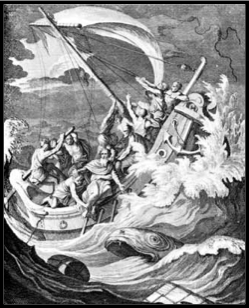
Next comes what Campbell calls a stay in the ‘belly of the whale’ a time when has been swallowed up so to speak, held, as if in limbo, the old has passed away and the new has yet to manifest. In myth the hero is engulfed in oppositional forces and to all intents and purposes appears to have died. Think of Inanna left to hang and rot on the peg in Ereshgigal’s great place below, or the Biblical Jonah.
Entering the “belly of the whale” means passing into a dark, inescapable place of profound trial, isolation, and forced reflection that ultimately leads to rebirth and personal transformation. A place of darkness and danger that describes a key stage in storytelling and personal growth where a person leaves behind their old identity, enters the unknown, and undergoes a symbolic death of the ego before emerging transformed
I can think no better way of describing this than T.S. Elliot in East Coker.
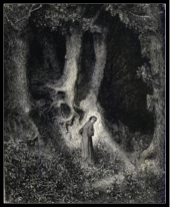
I said to my soul, be still, and wait without hope
For hope would be hope for the wrong thing; wait without love,
For love would be love of the wrong thing; there is yet faith
But the faith and the love and the hope are all in the waiting.
Wait without thought, for you are not ready for thought:
So the darkness shall be the light, and the stillness the dancing.
Myths and tales contain a number of symbolic references to zones of danger, such as the ‘dragon’s lair’, or ‘the lion’s den’. They represent transitions, usually with a sense of ‘no going back’ It is often a time of pause and of summoning resources, Campbell could have been referring to this when he says “The cave you fear to enter holds the treasure you seek.”
This is a time of deep introspection, the night without end when the hero is assailed by his / her fears and doubts. In fairy tales it often corresponds to the seven years in the forest, remember Dante’s famous first words, perhaps the most quoted in literature “I found myself lost in a dark forest At the midpoint of the journey’s life with no straight path I could see anywhere.” Not forgetting that we have from the Grimm’s the time of wearing out of the iron staff and iron boots or even the 100-year sleep. It can involve time in a wasteland of sorts, a time of ego loss and liminality, and unbeknownst to the hero, of inner preparation and transformation.
Emerging from the ‘belly’ the real quest or what Campbell refers to as ‘the supreme ordeal’ can really begin
“When he arrives at the nadir of the mythological round, he undergoes a supreme ordeal and gains his reward. The triumph may be represented as the hero‘s sexual union with the goddess mother of the world (sacred marriage), his recognition by the father-creator (father atonement), his own divinization (apotheosis), … intrinsically it is an expansion of consciousness and therewith of being (illumination, transfiguration, freedom).” ~ Joseph Campbell
This can take many forms and involve a number of tests, always there is a prize or treasure although, in a sense, the hero, the journey and the prize are the same thing contributing to the essential solar core, or divine aspect of the hero, always there, but previously, blissfully and unconsciously undisturbed. This sought for treasure can be a literal treasure, or something physical, like the water of life, a golden fleece, the gift of healing or prophecy, the realisation of one’s king / queenship, the attainment of the kingdom, a bride / groom, the sacred marriage and the founding of a dynasty. Always it is symbolic of some indestructible aspect of identity that once realised can never be taken away. For with this comes the awareness that all meaning, the characters and outer events of our life, ultimately and essentially lie within. For the unconscious content of this stage of the journey houses masses of archetypal material that will manifest in your life in ways appropriate for your own individuation process.
It will populate your dreams, your life will become marked by a series of meaningful coincidences and ‘ah ah’ experiences that will literally bump into you going down the street.
Finally, there is the return, the ascent.
“The final work is that of the return … At the return threshold the transcendental powers must remain behind; the hero re-emerges from the kingdom of dread (return, resurrection). The boon that he brings restores the world”. ~ Joseph Campbell
Note though that the ascent comes with strings attached, typically conditions or prohibitions, the way Persephone’s return depends on how many pomegranate seeds she has eaten, or the way Orpheus is permitted to lead Eurydice upward only if he refrains from looking back, or Psyche who must not open the box containing Persephone’s ointment, so the underworld extracts a toll or imposes a rule even as it releases its captive, and this gives ascent myths their characteristic tension, since we know the return can, and quite likely will, be undone right up to the threshold. We might call this failure, but really it is built in to the narrative from the very beginning so that we might conclude that this too is part of the journey, often resulting in a final ascension into the heavens such as was the case with Psyche.
This is now possible because the one who ascends is changed by the descent and never returns as they were before, so Persephone comes back not as the naive girl who was abducted but as a queen who now belongs to both the upper and lower worlds, just as Inanna’s ascent from the Sumerian underworld requires her to send someone else down in her place for the myth insists that nothing returns from the depths without a corresponding cost or transformation elsewhere.
Finally, the ascent phase represents integration rather than mere escape, meaning the figure who rises is bringing something of the underworld back with them into ordinary life, whether that is Persephone’s authority as queen of the dead, or Inanna returning with a harder and more sovereign understanding of power after having been stripped naked and hung on a hook, so the ascent is not only a return but also its treasure.
So once again the threshold crossing must be passed with the elixir or bride or fleece and return back into ordinary life. This return to the ordinary is often fraught, for their always remains the memory of what once was and what one sought and the treasure must always be guarded vigilantly lest it disappear and all gains be lost, for a time. Here too helpers may appear, sometimes as before, these may be animal helpers, coyote, fox, a whale or eagle, whoever, representing anthropomorphically some deep instinctive aspect of self.
Perhaps most importantly through myth and through life we learn that if the Call is refused, what remains is stagnation, disintegration, and psychic death. Nothing positive generally comes from refusing the call, which generally is not an option if one has elected to live life deeply. It is important to also remember that in the course of our life there will be many “Calls to Adventure” and like Parsifal we too must experience that even the falling or faltering can be part of the hero reaching his/her final destination. These ‘Calls’ will take many different forms and always ask the ‘quest’-ion, will you answer that Call by choosing to cooperate with the eternal flow of life, whether that be to pick up the gauntlet and ready your sword, to go nobly forth and enter the fray, or to hold still and wait?
Or to do both with different parts of your being?
For whether by choice (usually the hero’s position) or by necessity (usually the heroine’s situation) a person heeds the call, because not to do so is a form of death, and in doing so the stuff one is made of ~ the soul ~ emerges as challenges and losses are met on the journey.
Shortly before his death in 1961, Carl Jung was asked if he felt that mankind could survive. His answer was yes, if enough people would do their inner work.
Now more than ever, many decades later, what is needed is a massive rebirth of the heroic, of courage, and a willingness to engage the inner worlds, dreams, fantasies and the symbols contained therein. For it is into this shadow land, the kingdom of the ailing king and the idiot son that we must journey, recognising that they, along with the sorcerer, the dragon, the witch and the evil stepmother, as well as the beloved are all parts of ourselves. And that they must all be honoured if we are to redeem the outer world, and arrest the slide into unconscious annihilation.
As always, we make the path by walking. For some, it is right that the Hero picks up his/her sword and charges into the heart of the abyss within, into the mouth of the inner dragon, or into the interior castle under the spell of an evil omen. Just as, at other times, the Hero must outwait the darkness and the invisible demons that assail him or her, both within and without, in their spiral decent. That, in the end, the King might be healed, that crops might grow again, and the inner marriage of the prince and princess may occur, that wholeness once more might reign over the kingdom.
In the words of Joseph Campbell:
“There is what I call the hero journey, the night sea journey, the hero quest, where the individual is going to bring forth in his life something that was never beheld before.”
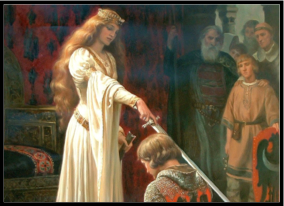
While for convenience sake these stages are represented sequentially in reality life is not always quite so neat. These stages do not always appear in this order and some may be very much longer than others, or even not appear at all.
In the birth chart the sign in which the Sun is placed symbolises the most heroic of chart factors and contemplating the mythic representations of our Sun sign can be uncannily revealing. It can tell us a great deal about the main themes of our hero’s journey with each sign representing a particular set of mythic figures. Each sign in turn also has its own presiding deity or sign ruler with a further set of stories. The planetary ruler of the Sun sign can give us considerable insight into the god who engenders the hero and the qualities within as well as the potentials which the hero must first seek to develop and unfold, as well as the nature of that transpersonal other to which we all aspire which informs, inspires and enlarges life.
The interplay of the other planets, Moon through Pluto, can give further insight as can their continuing movement in the form of transits, as they in the course of their cyclic passages make further critical aspects to the natal chart. These are times when we can be called upon to enact very literally some of the qualities of the planets in question. The Saturn at around age 29.5 is one such example, others are the succession of outer planet transits that occur around midlife, Pluto squaring itself around 38, Uranus opposition and Neptune Square at 42 the Saturn opposition at 44, recall Dante above “At the midpoint of my life’s journey …”
These are powerful transits that often birth powerful changes, including ‘calls’ to self and descents that can awaken a renewed sense of purpose and ‘call’ to adventure. The Jupiter returns every twelve years are generally less stressful but are nonetheless powerful awakeners, often accompanying times when we receive a boon or help from one of those magical helpers.
These are collective transits that affect everyone at around these ages, a personal reading or report can individualise them by delineating which houses they will fall in and so on. There are also many individual transits, particular to each individual person, these can only be obtained with an individual transit report or Forecaster.